

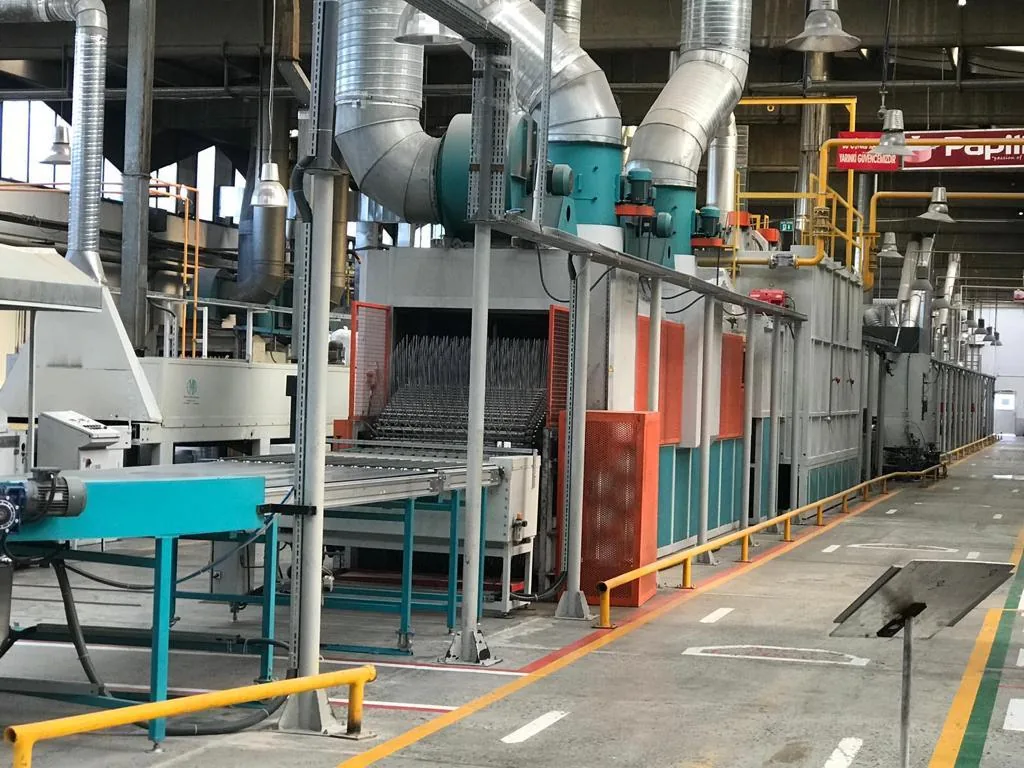
Private-label and OEM programs let a brand sell cookware made to its own specification without running a factory. Here is how that manufacturing actually works, stage by stage — and what a buyer should prepare to get an accurate quote.
Private label, white label and OEM — what's the difference?
In practice the terms overlap, but the distinction matters when you brief a factory:
- White label — an existing, standard product sold under your name with minimal change.
- Private label — an existing product finished to your brand: your colours, handle, packaging and logo.
- OEM — a product engineered partly or fully to your specification, which can include a custom shape, size range, coating spec or a bespoke mould.
A capable manufacturer offers all three from the same production line, so you can start with private label and move to full OEM as your volume grows.
Stage 1 — the aluminium disc
Quality begins before the pan is shaped. Papilla's group operates one of Türkiye's largest pure-aluminium disc operations, so the 99.5% aluminium input is produced and controlled in-house. Controlling the raw material means consistent thickness (gauge) from batch to batch — the single biggest driver of whether a pan warps or lasts.
Stage 2 — forming: pressing vs forging
The disc is shaped by pressing (efficient, ideal for everyday lines) or forging (heavier, thicker, more durable bodies). The method and the gauge together set the product's tier — see the aluminium & induction guide for how this affects performance.
Stage 3 — the mould shop
New shapes need tooling, and tooling is usually the real bottleneck. Papilla runs its own in-house mould shop, which shortens development of new models and holds tighter tolerances than suppliers who outsource their dies. For a buyer that means faster sampling, custom shapes that stay exclusive to you, and fewer surprises between sample and mass production.
Stage 4 — coating
The interior gets its non-stick (PTFE) coating and the exterior its finish. Because Papilla runs three application methods — roller, curtain and spray — the same tooling can produce a promotional pan or a premium retail line. This is what lets one factory serve many price points.
Stage 5 — assembly, finishing and QC
Handles (bakelite or stainless, riveted or welded), knobs and lids are fitted, the base is finished (rectified or stamped), and the product is inspected before packing. A serious manufacturer checks quality in-process and again with a pre-shipment inspection.
Capacity, lead times and MOQ
Papilla runs automated and robotic production at roughly 2,000,000 pieces per month, so a growing programme won't outrun the factory. MOQs and lead times vary by model, colour and packaging — a standard private-label run starts lower than a full-OEM custom mould, which carries tooling time and cost up front.
What to prepare for an accurate quote
- Target products, sizes and expected annual volume (for MOQ)
- Branding: logo placement, colours, and packaging artwork
- Coating preference and any induction requirement
- Required certifications and destination market (for food-contact compliance)
- Incoterms and target landed cost
See our full manufacturing capabilities for the complete picture, then request a quote.
Frequently asked questions
What's the difference between private label and OEM cookware?
Private label (or white label) means an existing product finished with your brand, colours and packaging. OEM means a product engineered partly or fully to your specification, which can include a custom shape, size range or a bespoke mould. Most manufacturers offer both.
Does OEM cookware require a custom mould?
Only if you need a new shape. You can run a private-label program on existing moulds with your branding and colours, and move to a custom mould — which adds tooling time and cost — when the volume justifies a unique design.
How long does private-label cookware production take?
Lead times vary by model, colour, packaging and volume. Sampling comes first, then production; a custom OEM mould adds tooling time up front. Ask the manufacturer for realistic sampling and production timelines for your specific brief.
Can one factory make both promotional and premium cookware?
Yes. With multiple coating methods (roller, curtain and spray) and a range of aluminium thicknesses, the same production line can produce a low-cost promotional pan or a premium retail line from the same tooling.