

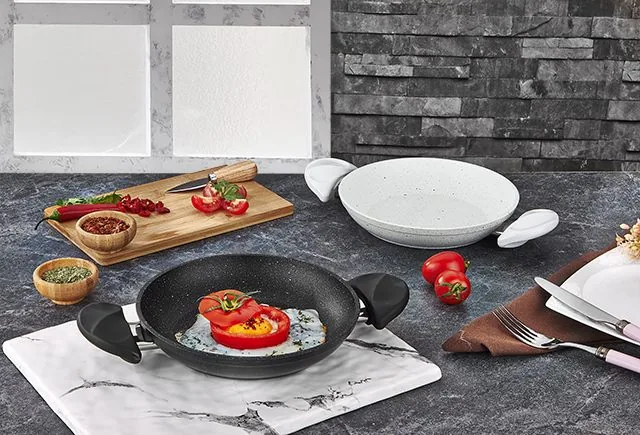
A non-stick pan's lifespan is decided as much by daily habits as by coating quality. These seven rules keep the release performance alive for years.
1. Before first use
Remove the labels, wash the pan in warm soapy water, dry it, and wipe a thin film of cooking oil over the surface. This simple preparation gets the coating working properly from day one.
2. Cook on low to medium heat
High heat is the number-one enemy of any non-stick coating. Because the aluminium body conducts heat so fast, low–medium settings are enough for almost everything. Never leave an empty pan on the hob.
3. Skip the metal utensils
Wooden, silicone or nylon tools won't scratch the coating. Metal spatulas and forks will wear down even the best coating over time.
4. No cold water on a hot pan
Sudden temperature swings (thermal shock) stress both the body and the coating. Let the pan cool before washing.
5. Wash by hand
A soft sponge and washing-up liquid are all it takes; avoid steel wool and abrasive powders. Dishwasher detergents and heat shorten a coating's life — hand-washing always means a longer-lasting pan.
6. Store it right
If pans nest inside each other, place a cloth or pan protector between them; bare metal contact can scratch the coating.
7. Know when to replace
If release performance has clearly faded or the coating is flaking, the pan has done its job. We cover the why and when in is aluminium cookware safe? and the technical side in the coatings guide. Shopping for a new one? How to choose a frying pan.
Frequently asked questions
Can non-stick pans go in the dishwasher?
Hand-washing always means a longer life: dishwasher detergents and heat wear the coating over time. A soft sponge and washing-up liquid are all you need.
Why has my pan started sticking?
The three usual causes: constant high heat, metal utensils and abrasive cleaning. Low-medium heat and wooden or silicone tools preserve release performance far longer.
What should I do before first using a new pan?
Wash it in warm soapy water, dry it, and wipe a thin film of cooking oil over the surface — this gets the coating working properly from day one.