

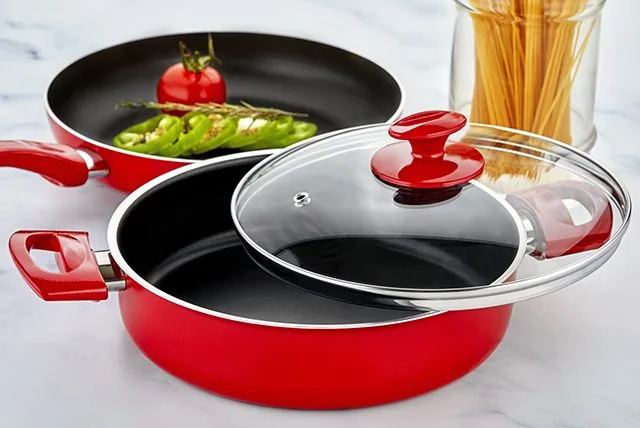
Looked after properly, aluminium cookware cooks like new for years. Daily habits matter as much as coating quality — here is the care guide, from the manufacturer's side.
Before first use
Remove labels, wash in warm water with a soft sponge and dry. Wiping the non-stick surface with a thin film of cooking oil conditions it for first use.
Heat: aluminium's golden rule
Because aluminium conducts heat so quickly, low-to-medium heat is enough for almost everything. High heat burns oil, makes food stick and ages a non-stick coating early. Never leave an empty pan on a hot hob.
The right utensils
Use wood, silicone or nylon; metal spoons and whisks scratch non-stick surfaces. Cutting with a knife inside the pan is the most common user mistake we see.
Cleaning
Do not plunge a hot pan into cold water — let it cool first; thermal shock stresses both body and coating. A soft sponge and washing-up liquid are enough; avoid steel wool and abrasive powders. For stubborn residue, simmering some water in the pan for a few minutes usually lifts it. Handwashing is always gentler on a non-stick coating than a dishwasher.
Storage
If you nest pots, put a paper towel or protector between them — coated surfaces rubbing together is the main cause of micro-scratches. Stacking lids separately protects the rims.
The exterior and the base
The coloured exterior finish needs care too: wipe boil-overs before they bake on, and never scour the base with abrasives. On models with a machined base, a clean base means full hob contact and even cooking.
When to replace
If the non-stick surface is visibly scratched, blistering or peeling, or the base has deformed and rocks on the hob, the pan has done its service. For coating-specific rules, see Non-Stick Pan Care: 7 Rules; on material safety, see Is Aluminium Cookware Safe?
Frequently asked questions
Can aluminium cookware go in the dishwasher?
Handwashing is always gentler on a non-stick coating. A soft sponge and washing-up liquid are enough; avoid steel wool and abrasive powders in all cases.
What heat setting should I use with non-stick cookware?
Low to medium. Aluminium conducts heat so quickly that high heat is almost never needed — it burns oil, makes food stick and ages the coating early. Never leave an empty pan on a hot hob.
How should I store nested pots and pans?
With a paper towel or pan protector between pieces. Coated surfaces rubbing together is the main cause of micro-scratches; stacking lids separately also protects the rims.
When should a pan be replaced?
When the non-stick surface is visibly scratched, blistering or peeling, or the base has deformed and rocks on the hob. Past that point, cooking performance and coating integrity don't come back.