

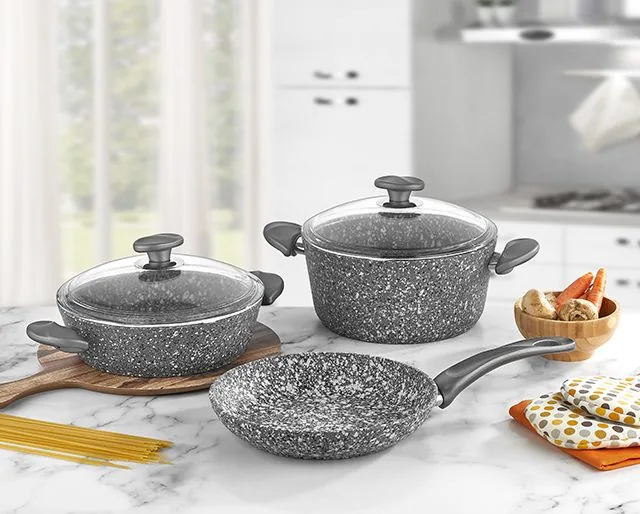
Pre-shipment inspection is the last point at which a cookware order can still be corrected. The checks that matter are few and physical: does it match the approved sample, is the base flat, does the coating hold, and will the handle survive use.
The approved sample is the reference
Everything downstream depends on this. Before production starts you approve a sample, and that sample — not the quotation, not an email — becomes the standard the run is measured against. Keep one retained copy yourself and leave one with the factory. The sampling sequence is covered in MOQs, lead times and sampling.
What to inspect
- Dimensions against the sample: rim diameter, height, body and base thickness, handle length. Diameter is measured across the inner top rim — see how to measure pan and pot size.
- Base flatness: set the pan on a known-flat surface or use a straight edge. A base that rocks will never sit properly on a ceramic or induction hob.
- Coating adhesion and coverage: look for thin spots at the rim radius and around any rivet, and check the finish is continuous. Adhesion is tested by a cross-hatch method in a lab, not by eye, so ask for the coating supplier's test report.
- Handles and fixings: whether riveted or welded, apply load and look for movement or play. Papilla specifies bakelite or stainless steel handles, welded, with rivets on certain products.
- Induction, if specified: hold a magnet to the base of a sample from the carton. It either sticks firmly or the pan is not induction-ready.
- Cosmetic defects: agree an acceptance level in advance. Sampling-based acceptance (AQL) is the normal industry approach; set the class before production, not after a rejection.
Packaging is part of the inspection
Check the printed carton against the approved artwork, confirm the inner protection actually prevents coating contact in transit, and verify barcodes scan. A coating scratched in the box fails at the shelf just as surely as one scratched in the factory. See packaging and branding.
What the paperwork should show
Ask which management systems the factory actually holds, and for the certificates rather than a claim. Papilla's production is certified to ISO 9001:2015 and ISO 14001:2015 and audited under BSCI, SEDEX and ICS. For food-contact documentation and what it is for, see cookware certifications and compliance.
Who does the inspecting
You can inspect yourself, appoint a third-party agency, or rely on the factory's own outgoing QC. The three are not equivalent and cost accordingly. Whichever you choose, agree in writing — before production — what is checked, at what acceptance level, and what happens to a failed lot. That conversation is much cheaper before the container is loaded than after it lands.
Frequently asked questions
What should be inspected on a cookware order before shipment?
Dimensions against the approved sample, base flatness, coating adhesion and coverage, handle and rivet strength, induction response with a magnet if specified, and the printed packaging. Agree a cosmetic acceptance level in advance rather than after a rejection.
How is non-stick coating adhesion tested?
Properly, in a laboratory by a cross-hatch method — not by eye. On site you can only look for thin spots at the rim radius and around rivets. Ask the supplier for the coating supplier's own test report.
What quality certifications does Papilla hold?
Production is certified to ISO 9001:2015 and ISO 14001:2015, and audited under BSCI, SEDEX and ICS. Ask for the certificates themselves rather than a claim — that is good practice with any factory.
Who should carry out the inspection?
You, a third-party agency, or the factory's own outgoing QC. They are not equivalent and they cost differently. Whichever you use, agree in writing before production what is checked, at what acceptance level, and what happens to a failed lot.