

In a private-label program, packaging is not an afterthought — it is the part of the product your customer sees first, and often the part customs and retailers inspect hardest. Here is how to brief cookware packaging and branding properly.
Where your brand goes on the product
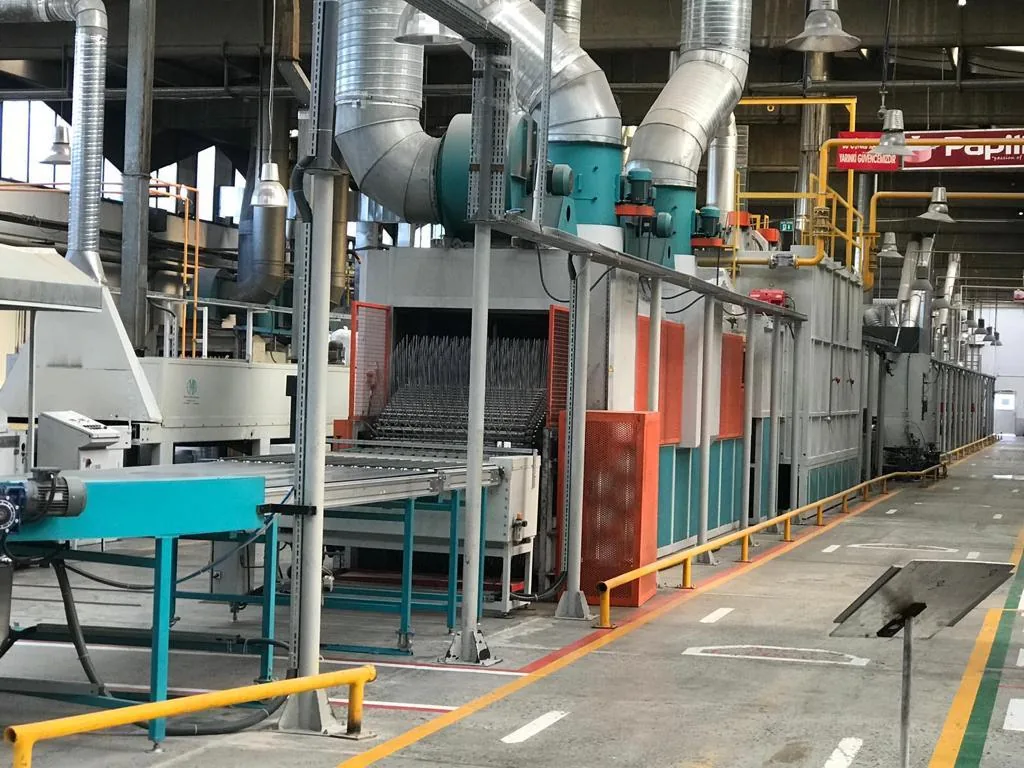
Branding on the cookware itself typically means your logo embossed or printed on the base, on the handle, or both, with the body colour and finish matched to your brand palette. Exterior finishes are applied in the factory's coating lines (roller, curtain or spray at Papilla), so colour is specified per series at order time — not applied afterwards.
Retail box, sleeve or label?
- Colour box — full-branded printed carton; the standard for retail shelves and gifting.
- Sleeve or belly-band — lighter branding around an open product; common for supermarket promotions.
- Label only — minimal cost for price-driven channels and open displays.
Sets usually ship in a printed master box with an insert protecting the pieces; single pans move in colour boxes or sleeves. Your channel decides: what sells from a shelf needs stronger print than what sells from a pallet.
What must be ON the box
Beyond design, packaging carries compliance content: barcode (EAN/UPC), country of origin, importer details, care and use instructions in the destination market's language(s), and any market-required marks. Multi-market programs often print multilingual panels or use per-market label versions — decide this at artwork stage, not after printing.
E-commerce changes the brief
A box that survives a retail shelf may not survive a courier network. If the range sells online, specify transport-ready packaging — tested cartons and inner protection — and remember dimensional weight: packaging size directly changes your delivered cost per unit.
The packaging sample step
Approve a physical packaging sample — print colours, carton strength, insert fit — alongside the product sample, before mass production. Screen previews miss what a printed carton shows immediately. The sampling flow is covered in MOQs, lead times and sampling.
How Papilla handles it
Papilla runs private-label and OEM programs end to end: product branding, colour development and packaging designed to the buyer's brief, produced in-house in Türkiye and exported to 85+ countries. For certification content your box and product may need per market, see the certifications guide.
Frequently asked questions
What packaging options exist for private-label cookware?
The standard options are a fully printed colour box (retail shelves and gifting), a sleeve or belly-band around an open product (supermarket promotions), and label-only for price-driven channels. Sets usually ship in printed master boxes with protective inserts.
What information must be on cookware packaging?
Beyond brand design: barcode (EAN/UPC), country of origin, importer details, care and use instructions in the destination market's language(s), and any market-required marks. Multi-market programs handle this with multilingual panels or per-market label versions.
Can Papilla produce packaging to our brand design?
Yes. Papilla's private-label and OEM programs include product branding, colour development and packaging produced to the buyer's brief, alongside the cookware itself — one factory, one program, exported to 85+ countries.
Should I approve a packaging sample before production?
Always. Approve a physical packaging sample — print colours, carton strength, insert fit — together with the product sample before mass production. Print issues that are invisible on screen show immediately on a physical carton.