

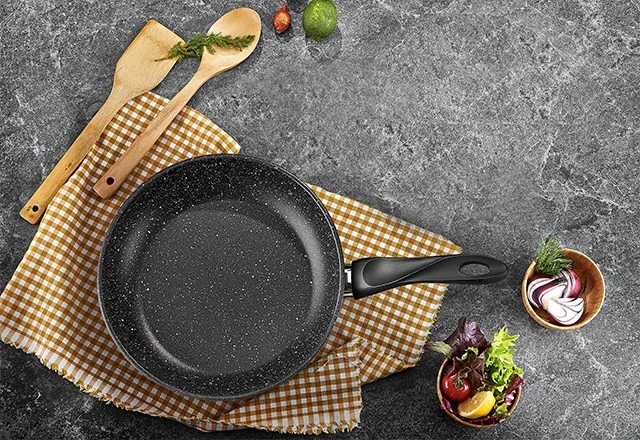
Pan and pot size is the inner diameter of the top rim: measure across the top from one inside edge to the other with a ruler or tape, in centimetres. Lid size is chosen by the same top diameter.
How to measure a frying pan
Place the pan on a flat surface and run the tape from one inside edge of the top rim to the opposite inside edge; that reading is the pan's size (26 cm, for example). The base is not the size — most pan bodies widen toward the top, so the base is several centimetres smaller than the rim. A "28 cm pan" with a smaller base is normal.
How to measure a cooking pot
The same rule applies: the inner diameter of the top rim. Volume (litres) is set by diameter and depth together — a shallow and a deep pot of the same 24 cm diameter hold different amounts. When comparing, check depth and litres, not just diameter. For the shallow-vs-deep decision: how to choose a cooking pot.
How to measure for a lid
Lids are made to the pot's top diameter: a 24 cm pot takes a 24 cm lid. If you are matching a lid to an existing pot, measure the pot's inner rim diameter and pick the same lid size. The size marked on a glass lid also refers to the rim it seats on, not the outer edge of the glass.
Which diameter for which job?
- 20 cm: eggs, crêpes, single portions.
- 24 cm: the daily pan and mid-size pot of a two-person kitchen.
- 26–28 cm: family size: frying, batch cooking, fuller dishes.
- 30 cm and up: big households, stocks and entertaining.
For the full sizing logic see how to choose a frying pan and the cookware set buying guide.
Sizes on Papilla products
Every Papilla product states its size in the product name and card — across pans, deep casseroles and sets. Set contents list each piece's diameter separately.
Frequently asked questions
Where do you measure a pan's size?
Across the top: run a tape from one inside edge of the rim to the opposite inside edge. That reading, in centimetres, is the pan's size. The base is not the size and is usually a few centimetres smaller than the rim.
How do I measure for a replacement lid?
Lids match the pot's top diameter: a 24 cm pot takes a 24 cm lid. Measure the inner diameter of your pot's top rim and buy the same lid size.
Should I buy a 24 cm or a 26 cm pan?
For a two-person kitchen, 24 cm usually covers daily cooking; family-size cooking and frequent frying are more comfortable at 26–28 cm. If torn between two sizes, the larger covers the smaller's jobs — not the other way round.
Why is the base smaller than the stated size?
Most pan bodies widen toward the top — it makes stirring and serving easier. The size in a product name always refers to the top rim diameter, not the base.