

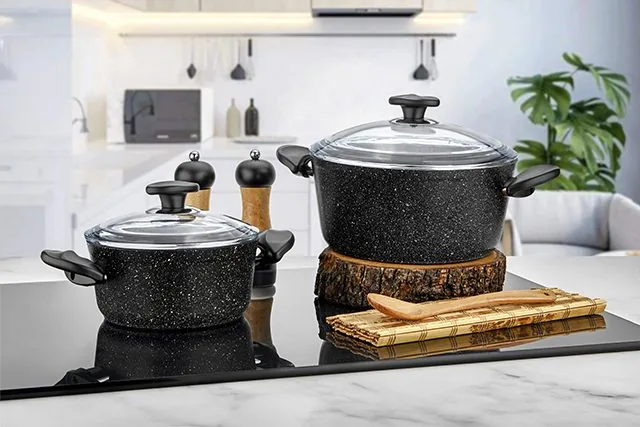
The right cooking pot comes down to size, depth, body thickness, the lid and your hob type. As an aluminium cookware manufacturer, here are the six things to check before you buy.
1. Size: how many portions do you cook?
Pot size refers to the top diameter. A mid-size pot covers everyday cooking for two; larger households and anyone batch-cooking soups or legumes should look at wider, deeper models. In most kitchens two sizes — one daily, one for guests — beat a single do-it-all pot.
2. Shallow or deep?
Shallow (low) casseroles suit dishes cooked with little liquid and easy table service; deep pots are the standard for soups, stocks, legumes and pasta. In the Papilla catalogue they are separate categories: shallow casseroles and deep casseroles.
3. The body: aluminium's advantage, and thickness
Aluminium conducts heat faster and more evenly than steel or cast iron, at a much lower weight for the same size. Papilla pots are made from 99.5% pure aluminium, pressed or forged depending on the line. A thicker body holds heat more steadily and resists deformation; a machined, flat base sits stable on the hob and cooks evenly.
4. The interior: non-stick coating
A non-stick (PTFE) interior keeps rice, milk-based desserts and legumes from sticking, allows low-oil cooking and cleans quickly. Coating life depends on daily habits — see our care guide.
5. Hob type: do you cook on induction?
A plain aluminium pot will not work on an induction hob — it is not magnetic. For induction kitchens choose ranges with a ferromagnetic base layer: at Papilla, series with "Plus" in the name and the Motto series are induction-ready. Quick test: if a magnet sticks to the base, the pot is induction-compatible. More detail: what makes cookware induction-compatible.
6. Lid and handle details
A lid that seats properly keeps steam in and shortens cooking times. How handles attach to the body determines day-to-day durability; if you plan oven use, check the handle material's heat resistance.
One pot or a set?
If you need several sizes, cookware sets are usually more economical than buying pieces one by one and keep the range consistent. We cover that decision separately: Cookware Set Buying Guide.
Frequently asked questions
What size cooking pot should I buy?
A mid-size deep pot covers everyday cooking for two; larger households and soup/legume-heavy kitchens should look at bigger sizes. In most kitchens two sizes — one daily, one for guests — work better than a single pot.
What is the difference between a shallow and a deep casserole?
A shallow (low) casserole is for dishes cooked with little liquid and easy serving; a deep pot is the standard for soups, stocks, legumes and pasta. They are designed for different jobs and don't fully substitute for each other.
Does aluminium cookware work on induction hobs?
Plain aluminium does not — it isn't magnetic. For induction, choose series with a ferromagnetic base layer: at Papilla, series with Plus in the name and the Motto series are induction-ready. If a magnet sticks to the base, the pot is compatible.
Where can I buy Papilla pots?
Retail at papillacookware.com; wholesale and private-label inquiries via the papilla.com.tr contact page. All pots are manufactured in Türkiye from 99.5% pure aluminium.