
No — aluminium cookware is not banned in Europe. It is sold in every EU country and regulated, like all cookware, under EU food-contact rules. Here is what the rules actually say, where the rumour comes from, and what certificates prove compliance.
Where the rumour comes from
The claim circulates on social media and usually mixes up two different things: official usage guidance for uncoated aluminium with acidic or salty foods, and an outright "ban" — which does not exist. European food-safety bodies have issued recommendations about prolonged contact between bare aluminium and acidic foods; no EU institution has banned aluminium cookware.
What EU rules actually say
All food-contact materials in the EU fall under the framework of Regulation (EC) No 1935/2004: materials must not transfer their constituents to food in quantities that endanger health. For aluminium specifically, the European Food Safety Authority (EFSA) has established a tolerable weekly intake, and European standards govern the composition of aluminium intended for food contact. Cookware sold legally in the EU is manufactured and tested within this framework.
Coated aluminium: food touches the coating, not the metal
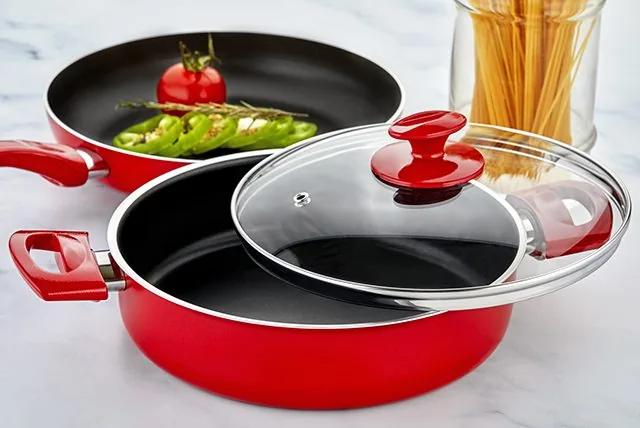
In coated aluminium cookware — the vast majority of what is sold today — food contacts the non-stick coating, not the aluminium body. Coatings are tested against the destination market's food-contact rules: LFGB for the EU benchmark, FDA for the USA. The aluminium body does the job it is best at: conducting heat quickly and evenly at low weight. Full detail: is aluminium cookware safe?
Is forged aluminium safe for cooking?
Yes — forging is a shaping process, not a different material. A forged pan starts as the same high-purity aluminium and is formed under pressure, which produces a thick, stable body that resists warping. Food-contact safety is determined by the coating and its certification, exactly as with pressed aluminium. Papilla forges and presses bodies from 99.5% pure aluminium depending on the series.
What proves compliance when you buy
For consumers: buy from manufacturers who state their food-contact compliance. For importers and private-label buyers: request a declaration of conformity for your market, third-party lab test reports for the coating, and certificates naming the actual factory — the full checklist is in our certifications guide. Papilla exports to 85+ countries including the EU, with coatings specified to the destination market's rules.
Frequently asked questions
Is aluminium cookware banned in Europe?
No. Aluminium cookware is sold in every EU country and regulated under EU food-contact rules, including the Regulation (EC) 1935/2004 framework. The rumour confuses usage guidance for uncoated aluminium with acidic foods with a ban that does not exist.
Is forged aluminium safe for cooking?
Yes. Forging is a shaping process, not a different material — the same high-purity aluminium formed under pressure into a thick, warp-resistant body. Food-contact safety is determined by the coating and its certification, as with any coated cookware.
Does food touch the aluminium in a coated pan?
No. In coated aluminium cookware, food contacts the non-stick coating, which is tested against food-contact rules such as LFGB in the EU and FDA in the USA. The aluminium body's job is conducting heat quickly and evenly.
What should an importer request as proof of compliance?
A declaration of conformity for the destination market, third-party lab test reports for the coating, and certificates naming the producing factory. Papilla exports to 85+ countries with coatings specified to each market's rules.